Acting Together to Build the World We Desire
Speaking to the Democratic National Convention in August of this year, Senator Raphael Warnock sounded a familiar sentiment, saying, “Our prayers are stronger when we pray together.” This echoed remarks he made in December of 2022, having just won re-election by defeating former professional football player Herschel Walker. At his victory speech that night, Warnock called voting a “prayer for the world we desire.”
I — and doubtless many of you reading this — may disagree with this characterization of voting. But even for us atheists, Warnock’s eulogy of Rev. Dr. Calvin Butts just days before the 2022 election can be instructive. He said, “the church’s work doesn’t end at the church door, that’s where it starts.”
Similarly, I believe our work as nonreligious Americans and engaged citizens begins — not ends — at the voting booth.
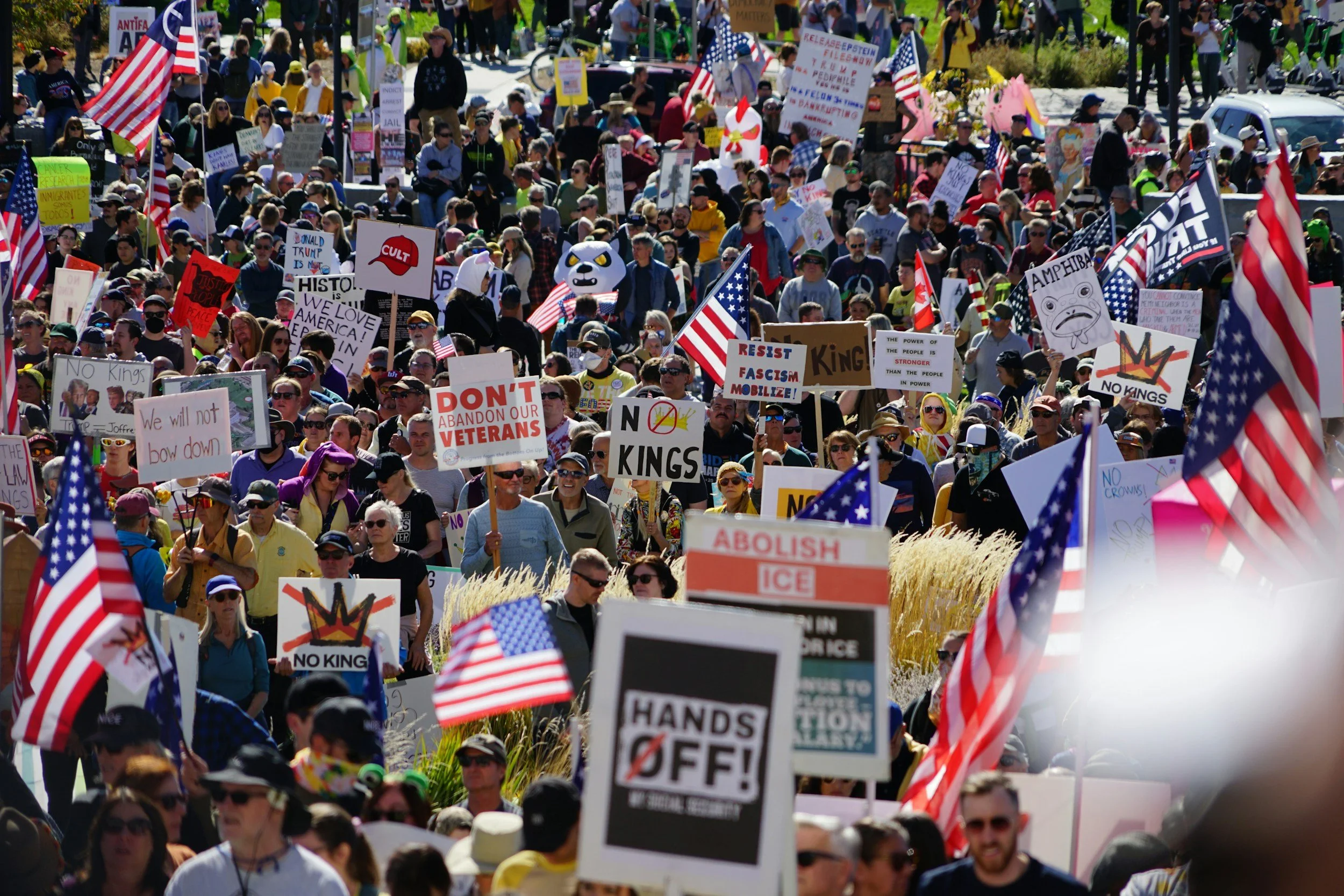
Ryan Burge, associate professor of political science at Eastern Illinois University, found that atheists are among the single most politically engaged religious demographic in America. We’re more likely to donate to candidates we support, more likely to volunteer to knock doors or phonebank, and more likely to show up at a protest or for local government meetings to make our voices heard. And yet, politicians continue to either ignore us or engage in outright antagonism toward our community.
This reality stands in sharp contrast to the stubborn stereotype of atheists as aloof, detached, uncaring, unmotivated, or otherwise uninterested in taking action to build the sort of world we want for ourselves and future generations. Why does this clichéd view of our community persist despite the data? Perhaps it’s because we’ve contributed to it ourselves.
For many years, I received weekly emails and phone calls from members, frustrated that the leadership of their local atheist or humanist group were unwilling to wade into so-called “political” issues. What qualified as “political” could include LGBTQ rights, abortion, the environment, immigration, or a whole host of issues people perceived as being even potentially controversial.
I believed then as I do today that this hesitancy to even discuss these issues comes from a place of fear. We atheists said for years that the only thing we had in common was our lack of belief in gods. Our leaders were so afraid of turning away even a single prospective member by taking a position — even on issues with almost unanimous agreement among atheists — that they did something far worse: they frustrated and alienated countless potential members by being unwilling to stand for anything.
That is not an error we can afford to repeat in today’s political environment.
My role as President of American Atheists is not to endorse candidates or make grand pronouncements as to the official doctrine of atheism. Rather, one of my responsibilities is to encourage our community to lean into our shared values. We know there is profound agreement among atheists on a number of important issues facing our nation today — our commitment to a functioning, responsive, pluralistic, secular democracy being the cornerstone of that agreement.
In a moment like the one our country is facing today, our engagement with the political process must continue to be about more than just voting on November 5th (though I hope you’ll do that, too).
It has to be the kind of work that has us acting together, as atheists, knocking on doors to register voters, showing up to local government meetings and protests to hold our elected officials accountable, and working to change the things that need changing, for ourselves and for the future.
