This is the Fight We’ve Been Preparing For
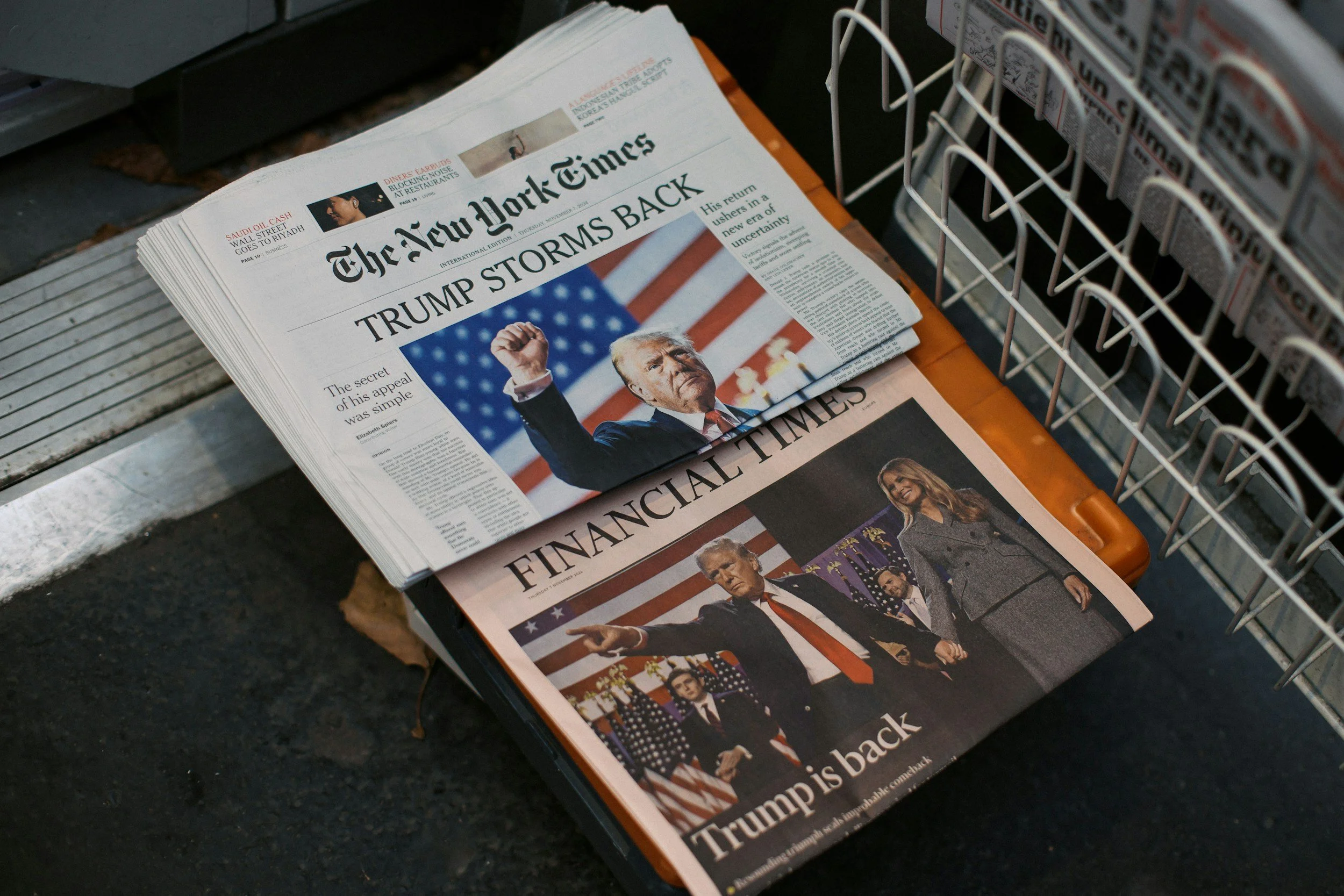
For four years, we’ve known this moment could come. We’ve known the Christian nationalist movement is tremendously well funded, incredibly well organized, and frighteningly well connected. And we’ve known exactly what they would do with power, as Project 2025 made it crystal clear what would be on the agenda were they to win.
We are a narrowly divided country. Whether it was a failure to convince voters that the catastrophically unpopular proposals within Project 2025 were, in fact, the agenda for a second Trump Administration or that voters simply didn’t care, the fact remains that the Christian nationalists’ plans are already being put into action.
Their agenda is a literal wishlist for the groups American Atheists has spent decades opposing. Written by the Heritage Foundation and operatives connected to the Alliance Defending Freedom, the Family Research Council, First Liberty Institute, and other far-right religious legal outfits, Project 2025 gives the incoming administration a roadmap to make abortion difficult or even impossible to access. It lays out exactly which regulatory levers federal agencies, staffed with even more operatives from those same extreme groups, should pull to undercut LGBTQ rights with religious exemptions. It takes aim at no-fault divorce, contraception, vaccines, and secular public schools.
And Donald Trump, despite his transparently farcical attempts to distance himself from Project 2025 during the campaign, continues to be in lockstep with this agenda. He even tacked on a pledge to create a government task force aimed at rooting out so-called “anti-Christian bias.”
President Ronald Reagan’s director of presidential personnel once said, "Personnel is policy." Thus far, almost a third of Trump’s announced nominees have ties to Project 2025, including Russell Vought, arguably the chief architect of the plan, to lead the powerful but under-the-radar Office of Management and Budget.
But in contrast to the first Trump presidency — and to the emergence of Project Blitz — this time, our movement is ready. Where we were previously caught flat-footed at the outcome of the 2016 election and the sudden torrent of state-level Christian nationalist bills flooding legislatures across the country, today we’re not repeating the mistakes of the past.
Our preparations started during the first Trump administration, shifting our focus to advocacy and building capacity at the state level. Recognizing the paralysis of Congress on all but a narrow set of issues, we instead focused on state legislatures. That work has already paid dividends.
In partnership with our allies, we’ve taken a leadership role in passing child marriage bans in 13 states since 2018. We passed and implemented a first-of-its-kind healthcare transparency law in Colorado. We defeated attempts to create new religious exemptions from public school vaccination requirements and successfully closed existing loopholes. If not for Governor Kathy Hochul’s inexplicable veto, we would have passed a landmark substance use recovery bill in New York that would protect the rights of atheists, humanists, and all New Yorkers to access substance use treatment options that work for them.
And across countless states, our advocacy — both public-facing and behind-the-scenes — has limited religious exemptions, privileges, and other “accommodations” from making their way into a host of civil rights protections and general laws. Those state-level policy victories, and the ones to come, serve as an important check on the actions of a hostile federal government.
This isn’t to say we’re ceding ground in Washington, D.C.. Rather, it’s an acknowledgment that we must prioritize our resources in the places where we are most likely to find success,where we can use that work to build our movement, and where our community faces the most discrimination.
That’s where state and local advocacy shines. Beyond the substance of any single piece of legislation is the fact that these victories help our community increase its civic engagement and normalize participation of atheists and other nonreligious people in our democracy. They are opportunities for us to build partnerships with allied groups and with new grassroots supporters and members. These connections, and our community’s civic engagement in our towns, cities, and states, serve as vital on-ramps for atheists and other nonreligious people who have not yet joined us as members — and for people who may not (yet) conceive of themselves as activists.
All these positive effects allow our community to see we have the power and ability to shape a better world for ourselves and for future generations.
We cannot be a movement defined simply by what we’re fighting against. We must have a positive vision for a better world, and we do. It’s a vision that represents our values as an organization and, just as importantly, values shared by the overwhelming majority of our community. It’s a future that embraces the aspirations of the American experiment while acknowledging that perfecting our union still requires hard work.
To be sure, the road ahead will be difficult. We will lose fights. We will feel exhausted. But we cannot assume defeat in advance. We can’t get stuck. We have a vibrant, powerful community behind us. We have to rely on each other in this moment.
To borrow a metaphor: every Goliath has a weakness. And the Christian nationalist movement is no exception. Their hubris, on full display even in the midst of a narrow electoral victory, is that weakness. They will overreach. And when they do, because of the work we’ve done and are continuing to do — we’ll be ready.
