They’re Not Going to Stop At Abortion
Emboldened by the religious extremist majority on the Supreme Court, Christian nationalists and their political allies are coming for our most personal and fundamental rights.
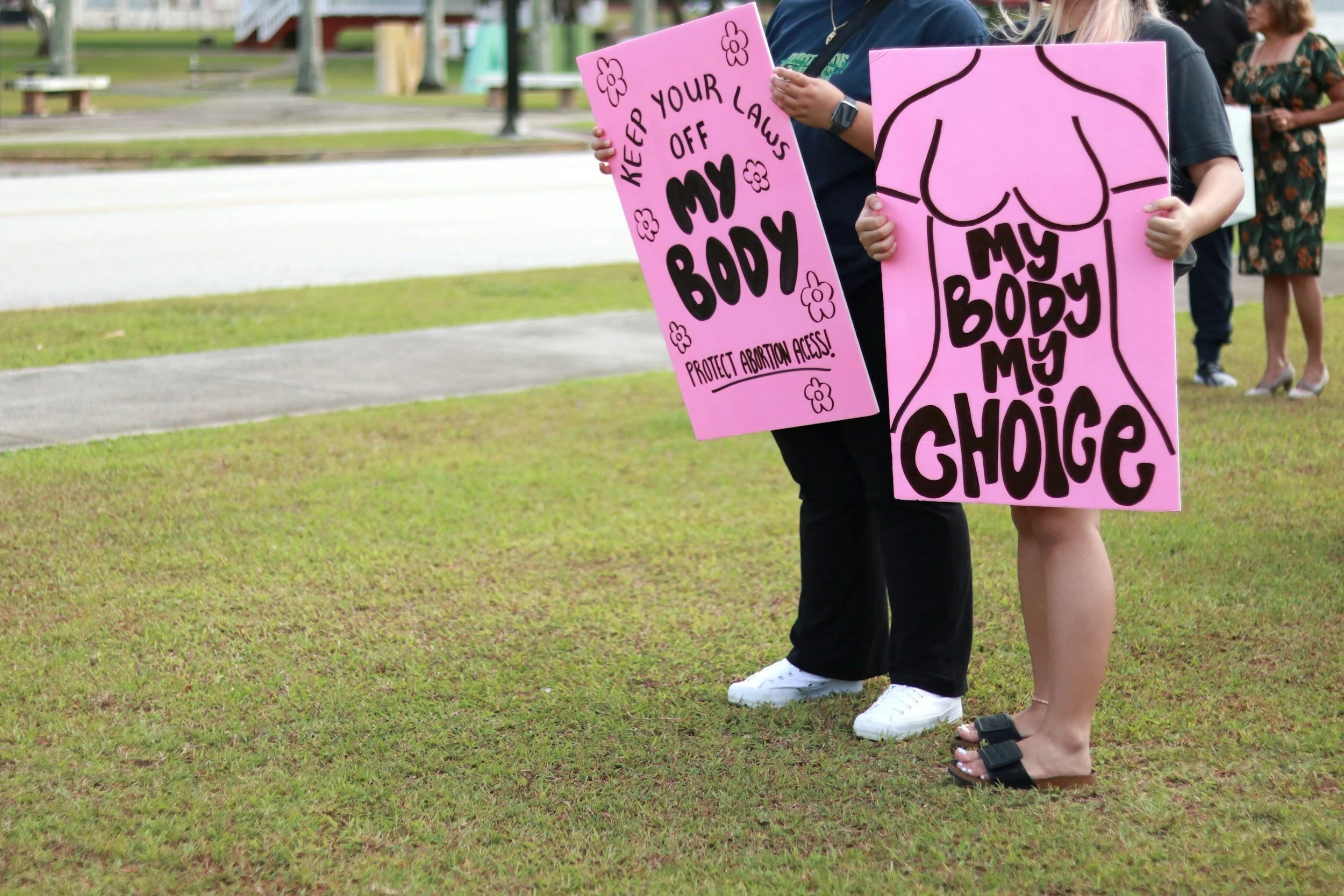
In May, a draft opinion written by Supreme Court Justice Samuel Alito overturning Roe v. Wade, the landmark case protecting the right to abortion, was published by Politico. The leak itself was unprecedented in the Court’s modern era.
While some—specifically those who have spent considerable time, money, and effort stacking the federal judiciary to achieve precisely this outcome—were wringing their hands about this stunning breach of decorum, the majority of Americans who support abortion access were far more appalled by the opinion itself.
Justice Alito spends much of the 98-page draft attempting to justify his view that the right to control one’s own reproductive choices is not “rooted in the Nation’s history and tradition.” Alito purports to find that “an unbroken tradition of prohibiting abortion on pain of criminal punishment persisted from the earliest days of the common law until 1973.” But that prohibitionist tradition simply doesn’t exist.
Plenty of ink has already been spilled by attorneys and historians debunking most of Alito’s telling of things, so I don’t feel compelled to do so here. From ignoring distinctions made between abortion occuring before and after “quickening”—the moment when the fetus’s movements can first be felt—to conflating killing a woman during an abortion with the abortion itself, Alito’s eagerness to overturn Roe seems to be matched only by the sloppiness of his argument.
Alito’s ahistoric analysis notwithstanding, it is deeply alarming that he and his colleagues base so much of their analysis on which groups have or have not historically had access to certain rights and liberty interests.
People who today still suffer the long term structural effects of generations of discrimination are, under Alito’s reasoning, not entitled to constitutional protection of their rights by virtue of the fact that they were previously subjected to such discrimination. And for these groups, the ballot box is unlikely to be the solution to their concerns, particularly because this Court has made it crystal clear in decision after decision that political gerrymandering—or even racial gerrymandering as long as you don’t say out loud that you’re doing it— is not something the courts will address.
Minority groups and historically marginalized communities are then left in a Kafkaesque nightmare where their long-denied rights are used as evidence against their quest to protect those very same rights in the future and where the only solution to their exclusion from the democratic process is participation in the democratic process.
And so, beyond the short-term threat to abortion rights, there is no question that Alito’s reasoning clearly puts protections for many groups at risk. Alito has made no secret of his disdain for the Obergefell decision that protected the right of same-sex couples to marry, so it seems obvious that the rights of LGBTQ people are next on the chopping block under his reasoning.
Sodomy laws, purportedly banning all Americans from engaging in certain sorts of sexual activities but primarily used against gay and lesbian Americans, were not struck down by the Court until the Lawrence v. Texas decision in 2003, overturning 1986’s Bowers v. Hardwick decision. At the time of Lawrence, 14 states still had statutes banning sodomy. From the 1950s until the 1990, Congress banned gays and lesbian immigrants from the United States. And it wasn’t until 1998 that the federal government’s ban on gay federal employees was finally lifted.
Turning the clock back further, contraception—and indeed even the discussion of contraception—was banned under the 1873 Comstock laws, having been deemed “obscene.” It wasn’t until 1972’s Eisenstadt v. Baird that the Court finally held that Americans (including unmarried Americans) had the right to decide whether to use contraception.
But women, those needing abortion or other reproductive care, and LGBTQ people aren’t the only groups in the crosshairs because of Alito’s extreme draft.
As recently as 1927 in Buck v. Bell, the Supreme Court held that the forced sterilization of certain Americans “for the protection and health of the state” did not violate the Constitution. No later decision has ever overruled this holding, though the Americans with Disabilities Act guaranteed protections for Americans with disabilities, including the intellectually disabled, sixty years later in 1990.
The threat of Alito’s decision isn’t just in the sheer number or breadth of cases and rights it undermines: It’s that this Court has also made it impossible for Congress or our state legislatures to enact laws aimed at protecting those rights when the law has the potential for conflict with even a pretextual religious belief.
If this Court is going to hold that the Constitution contains no guarantee of the right to be free from government interference in your choice to use contraceptives, surely our state legislatures could protect that right, you might say. Not so fast.
What if your employer has a sincerely held belief that your contraception of choice is actually an abortifacient? What if an adoption or foster agency has a deep and genuine religious conviction that same-sex couples are inherently unqualified to care for children? Or that atheist parents are equally unfit? Or what if a state were to pass a law requiring that all taxpayer money that funds education can only go to secular schools that do not discriminate?
These, obviously, aren’t merely hypotheticals. These are all cases that the Supreme Court has either recently ruled on or that are pending this term. And these are all issues where we atheists have a deeply vested interest because we are either overrepresented in the groups being targeted or because the unfairness, cruelty, and weaponizing of religion are antithetical to our core values.
There is no magic bullet here. American Atheists has supported proposals to expand the size of the Supreme Court and federal judiciary, repeal or even just rein in the Religious Freedom Restoration Act, and other federal fixes. But those proposals are going to be difficult to pass in this hyper-divided and gridlocked Congress.
We’ve also supported direct-aid groups helping those needing abortion services. At our national convention this year, we raised more than $17,500 for Access Reproductive Choice—Southeast, a nonprofit organization that helps people in the Southeast who need abortions pay the costs associated with receiving care. That sort of person-to-person funding is going to be all the more important when abortion access is cut off for people living in entire states or regions.
The long term fight here is, largely, the same as it’s been for decades: building power at the grassroots level, translating that power into action in our communities and states, and exposing the real-life consequences of the extremism of our opponents. Alito’s decision isn’t an academic exercise for the millions of people who will pay the price the day it is handed down. And it’s a price we’re all going to have to pay as the clear consequences of this ruling reverberate through our laws.
